
When you walk onto almost any construction sites, you’ll still see the same setup: big piles of sand, cement bags, lime and someone mixing mortar by hand in a portable mixer.
It works — but we’ve been using this approach for decades – and times are changing. Dry mortar is part of the shift away from that process. Instead of mixing everything on-site, the materials are pre-blended in a factory controlled environment and delivered ready to use. All that’s needed on site is access to power and water. That one change removes a surprising number of variables.
What Is Dry Mortar?
Dry mortar is a pre-mixed blend of cement, sand, and additives prepared off-site under strict quality controlled conditions. It’s delivered either in 1 ton bags or silo’s and activated with water when required.
Because it’s produced in a factory setting:
- The ratios are precise
- The materials are consistent
- The quality is repeatable
That consistency is hard to achieve on site, especially across different workers and changing conditions.
How Dry Mortar Works on Site
The basic idea is simple:
1. Material is delivered dry and pre-mixed
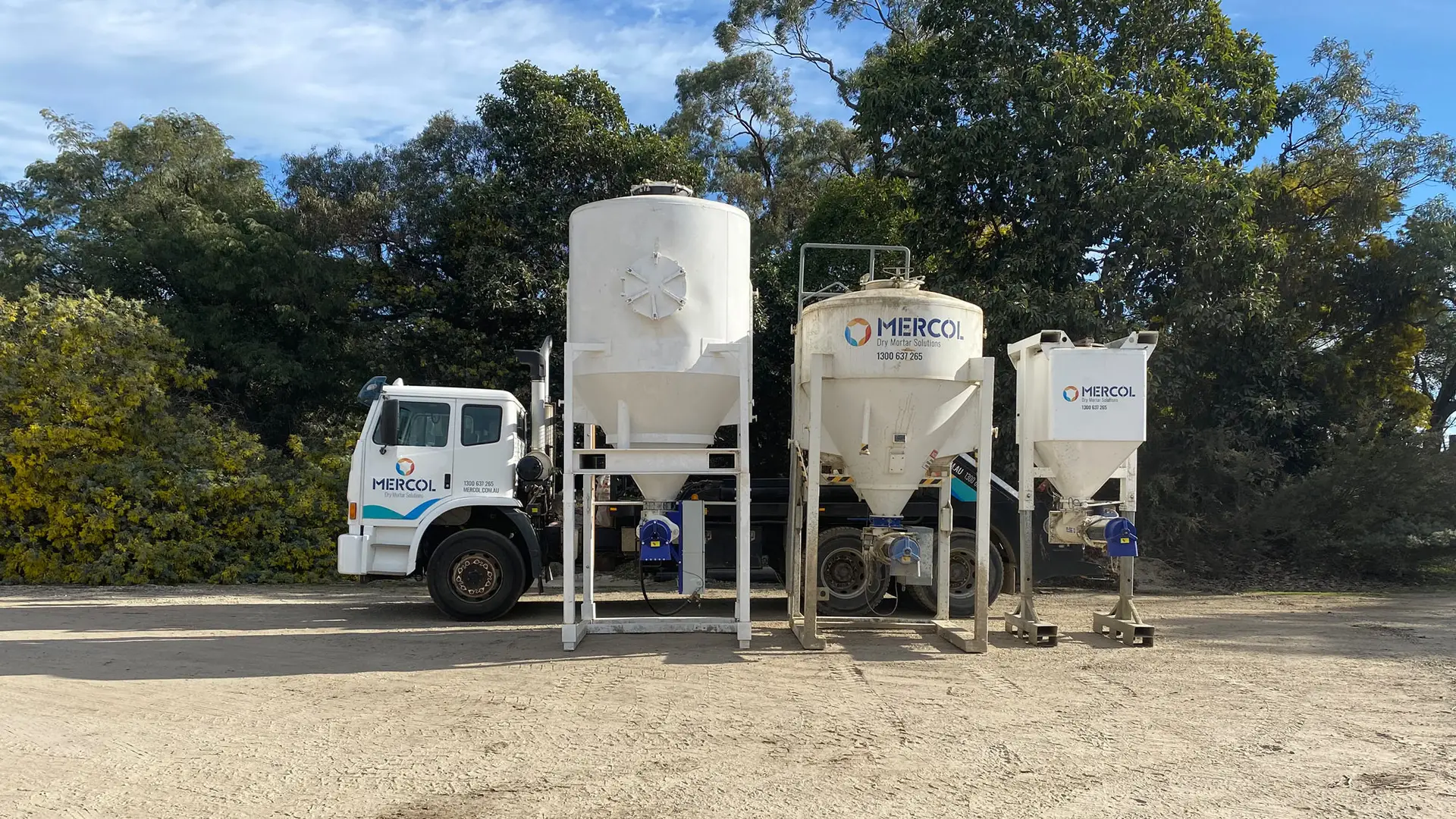
2. It’s stored on site (often in a silo, can also be delivered in 20kg bags))
3. Water is added when needed
4. Mortar is produced instantly at the push of a button
With systems like those supplied by MERCOL, this process becomes continuous — mortar is available on demand rather than in batches.
Why Builders Are Moving Away from On-Site Mixing
Most builders don’t switch because they don’t understand mixing — they switch because of inconsistency and inefficiency. On-site mixing introduces:
- Variation in strength and colour between batches
- Labour time spent mixing instead of building
- Material waste from overproduction
Dry mortar removes those issues by standardising the process.
The Real Benefit: Workflow, Not Just Material
What changes isn’t just the mortar — it’s how the site operates. With consistent supply:
- Bricklayers aren’t waiting for mixes
- Work flows more smoothly
- Output becomes more predictable
It’s a small operational shift with a noticeable impact over the course of a project.
When It Makes the Most Sense
Dry mortar isn’t necessary for every job, but it becomes increasingly valuable when:
- The project is large or multi-stage – commercial or high end residential
- Bricklaying gangs are involved
- Colour consistency is critical
- Time pressure is high
Final Thoughts
Dry mortar isn’t new — but its adoption is growing because it solves problems that haven’t changed in decades. It’s not about replacing traditional methods entirely. It’s about improving mortar consistency, reducing friction, and making site operations safer and more efficient.
Want to Simplify Mortar Supply on Your Next Project?
If you’re planning a job where strength & colour consistency and efficiency matter, it’s worth looking at modern mortar systems. Request a quote or site assessment today.