
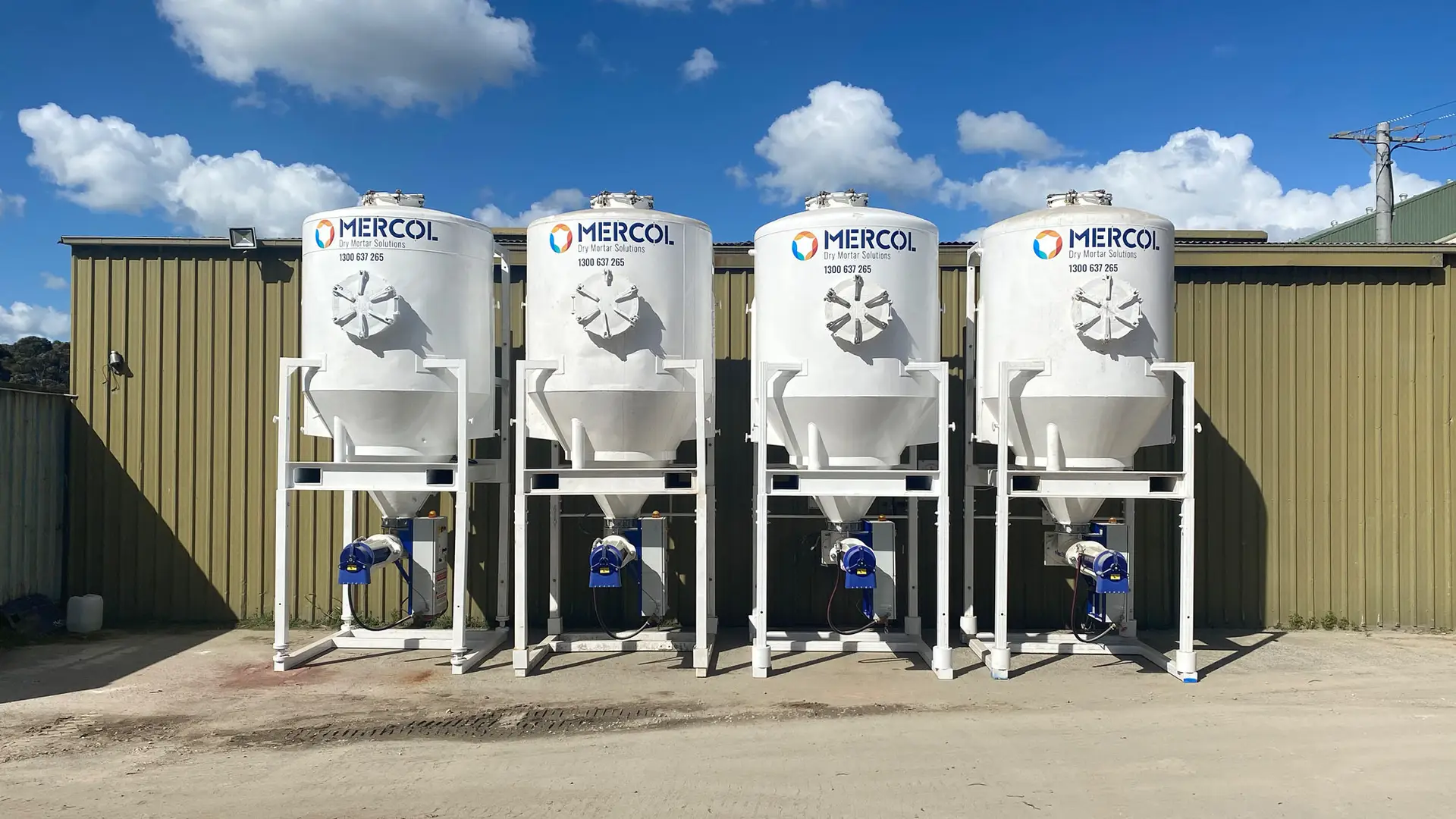
At first glance, a mortar silo can look like overkill. But once you see how it works on-site, it makes more sense.
The process is straightforward:
1. Pre-mixed dry mortar is delivered in bulk
2. It’s stored in a sealed silo
3. Water is added through a controlled system
4. Fresh mortar is produced instantly – at the touch of a button
No wheelbarrows. No big piles of sand and cement. No guesswork. The key benefit isn’t just speed — it’s consistency. (Although it is much faster!) Every single batch comes out the same. That’s hard to achieve with manual mixing, especially across different labourers and changing weather conditions.
Mortar Silo vs Traditional Mixing: What Actually Saves More Time?
On paper, mixing mortar manually doesn’t seem like a big delay.
But break it down over a full day, and it adds up:
- Time spent measuring
- Time spent mixing
- Waiting between batches
Multiply that across a gang, and you’re losing hours. Silo systems remove the waiting periods. Mortar is available at the push of a button. Builders who switch often notice:
- More consistent workflow
- Less downtime
- Better output per worker
It’s not about replacing labour — it’s about making better use of it.
Benefits of Dry Silo Mortar (Beyond the Obvious)
Most people focus on speed — and yes, that’s a big part of it. But there are other benefits that don’t get talked about as much.
Consistency, for one. Every mix is identical, which improves both strength and finish.
Then there’s waste (which costs you money!). Manual mixing often leads to excess mortar that ends up unused. With dry mortar silo systems:
- You produce what you need
- When you need it
And finally, site organisation. Less material lying around. Less mess. A cleaner, safer working environment.
How much mortar do you need?
This is one of the most common questions — and the answer isn’t exact. As a rough guide:
1 ton of dry mortar (0.7 cubic metres of wet mortar) is enough for 650 – 700 bricks (although this does depends on the individual bricklayer and the type of bricks used).
- But that depends on:
- Brick size
- Joint thickness
- Workmanship
Where things go wrong is underestimating
Running out towards the end of a shift slows everything down. Over-ordering leads to waste. That’s why more builders are using calculators or supplier estimates to get closer to the actual requirement before the job starts.
Want us to help you save time and money on your next project?
If you’re planning a job where you need to save time and money, it’s worth looking at modern mortar systems.